recipes using canned pears
Discover versatile canned pear recipes, nutritional data, and market trends. Partner with Jutai Foods Group (Qingdao) for ISO-certified OEM exports to 80+ countries.
Introduction: Beyond the Fruit Bowl
In the modern culinary landscape, where "fresh" is often synonymous with "superior," canned fruits frequently find themselves relegated to the back of the pantry, viewed as a mere emergency backup or a nostalgic relic of mid-century casseroles. However, this perception overlooks a versatile, nutritious, and economically sound ingredient that has sustained families and fueled industries for decades: the canned pear.
Pears, specifically varieties like Bartlett (Williams) and Bosc, possess a unique texture and flavor profile that transforms beautifully during the canning process. Unlike some fruits that lose their structural integrity, pears retain a delightful tenderness while absorbing syrups and spices, making them ideal for a vast array of recipes ranging from quick weekday desserts to complex gourmet entrees.
This article explores the multifaceted world of canned pears. We will delve into specific, practical recipes, analyze the nutritional and economic data supporting their use, and examine the global market trends that make canned pears a staple in over 80 countries. Furthermore, we will look at how industry leaders are ensuring that every can opened meets the highest standards of safety and quality.
The Science and Statistics of Canned Pears
Before diving into the kitchen, it is essential to understand the value proposition of canned pears through data. The decision to use canned fruit is not just about convenience; it is often a strategic choice based on nutrition retention, cost efficiency, and supply chain reliability.
Nutritional Retention and Safety
A common misconception is that canning destroys all nutrients. Research indicates that while water-soluble vitamins like Vitamin C may see a slight reduction during the heating process, other vital nutrients remain stable or even become more bioavailable. The canning process involves sealing the fruit in an airtight container and heating it to destroy microorganisms, effectively locking in freshness at the peak of ripeness.
According to data from food science studies, canned pears are an excellent source of dietary fiber and copper. A standard serving (approximately half a cup) provides roughly 3 grams of fiber, which is crucial for digestive health. Moreover, because pears are low-acid fruits, they require specific thermal processing to ensure safety against Clostridium botulinum, a rigorously monitored standard in the industry.
Table 1: Nutritional Comparison (Per 100g Serving)
| Nutrient | Fresh Pear (Average) | Canned Pear (in Juice) | Canned Pear (in Light Syrup) | Key Benefit |
|---|---|---|---|---|
| Calories | 57 kcal | 42 kcal | 65 kcal | Juice-packed option is lower in calories |
| Dietary Fiber | 3.1 g | 2.8 g | 2.9 g | Both are high in fiber for digestion |
| Vitamin C | 4.3 mg | 2.5 mg | 2.8 mg | Fresh is slightly higher, but canned still offers antioxidant support |
| Potassium | 116 mg | 105 mg | 110 mg | Beneficial for heart health; difference is minimal |
| Shelf Life | 5-7 days (refrigerated) | 2-3 years (pantry) | 2-3 years (pantry) | Canned significantly reduces food waste |
| Prep Time | 5-10 mins (washing/peeling) | < 1 min (open & serve) | < 1 min (open & serve) | Canned saves significant labor and time |
Data sources synthesized from USDA FoodData Central and general food processing industry reports.
The data clearly highlights a critical advantage: Shelf Life and Waste Reduction. In a global context where food security and waste management are paramount, the ability of canned pears to remain edible for up to three years without refrigeration is a significant logistical asset. For households and food service providers, this translates to lower spoilage rates and better inventory management.
Economic Viability and Market Trends
The economic argument for canned pears is equally compelling. Fluctuations in fresh fruit prices due to seasonality, weather events, and transportation costs can be volatile. Canned pears offer a price-stable alternative.
Global trade data suggests a steady demand for processed fruits, driven by urbanization and the need for convenient meal solutions. The ease of transport—stackable, durable cans that do not require cold chains—makes canned pears a dominant product in international trade, reaching markets from the European Union to remote regions in Africa and Southeast Asia.
Table 2: Cost and Logistics Efficiency Analysis
| Factor | Fresh Pears | Canned Pears | Impact on Consumer/Business |
|---|---|---|---|
| Seasonal Availability | Limited (Late Summer/Winter) | Year-Round | Consistent menu planning |
| Transportation Cost | High (Refrigerated, Air/Fast Sea) | Low (Ambient, Bulk Sea) | Lower retail price point |
| Labor Cost (Prep) | High (Peeling, coring, slicing) | Negligible | Reduced operational overhead |
| Portion Control | Variable (Size differences) | Precise (Standardized cuts) | Accurate costing for restaurants |
| Import Reach | Limited by shelf-life | Global (80+ countries) | Wider market access |
The table above illustrates why canned pears are a preferred choice for large-scale food manufacturers and export-oriented businesses. The standardization of cuts (halves, slices, diced) allows for precise recipe formulation, a crucial factor for industrial food production.
Culinary Versatility: Recipes for Every Occasion
The true test of any ingredient is its performance in the kitchen. Canned pears are remarkably adaptable. Their soft texture makes them perfect for purees, while their shape-holding ability suits baking and grilling. Below are curated recipes that demonstrate this versatility, designed for both home cooks and professional chefs.
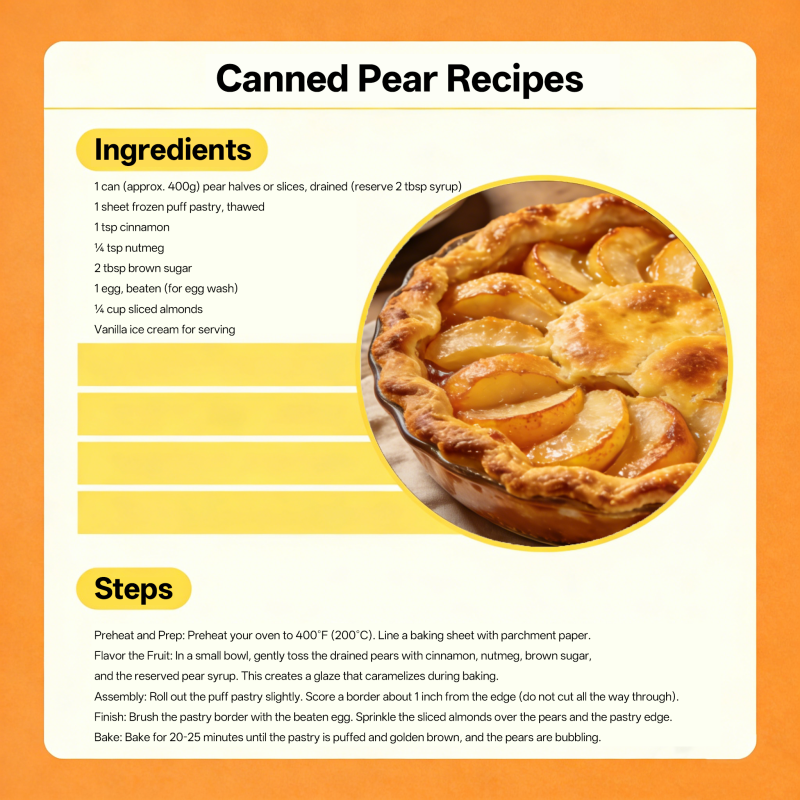
1. The Quick Gourmet: Spiced Canned Pear Tart
This recipe elevates the humble canned pear into an elegant dessert suitable for dinner parties, utilizing the pre-sliced nature of the product to save hours of prep time.
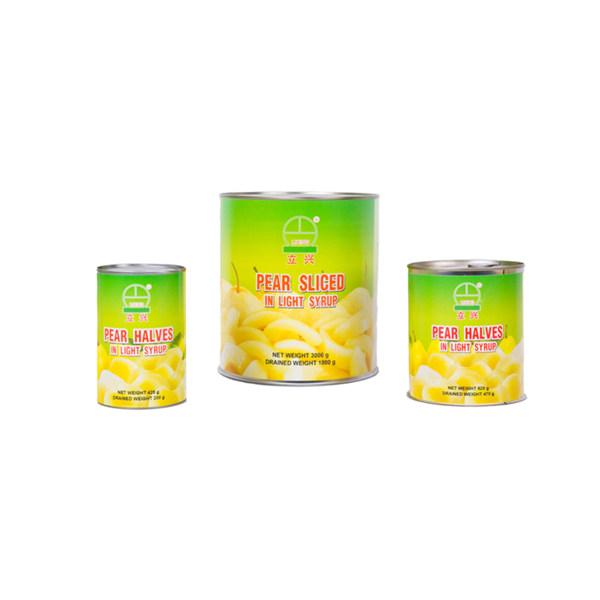
View related products: 425g canned pear half in light syrup
Ingredients:
1 can (approx. 400g) pear halves or slices, drained (reserve 2 tbsp syrup)
1 sheet frozen puff pastry, thawed
1 tsp cinnamon
¼ tsp nutmeg
2 tbsp brown sugar
1 egg, beaten (for egg wash)
¼ cup sliced almonds
Vanilla ice cream for serving
Instructions:
Preheat and Prep: Preheat your oven to 400°F (200°C). Line a baking sheet with parchment paper.
Flavor the Fruit: In a small bowl, gently toss the drained pears with cinnamon, nutmeg, brown sugar, and the reserved pear syrup. This creates a glaze that caramelizes during baking.
Assembly: Roll out the puff pastry slightly. Score a border about 1 inch from the edge (do not cut all the way through). Arrange the spiced pears neatly within the border. If using halves, place them cut-side up in a circular pattern; if using slices, overlap them like shingles.
Finish: Brush the pastry border with the beaten egg. Sprinkle the sliced almonds over the pears and the pastry edge.
Bake: Bake for 20-25 minutes until the pastry is puffed and golden brown, and the pears are bubbling.
Serve: Let cool for 5 minutes. Serve warm with a scoop of vanilla ice cream.
Why it works: The high heat of the oven caramelizes the sugars in the syrup, creating a depth of flavor that mimics fresh poached pears but in a fraction of the time.
2. The Savory Twist: Canned Pear and Blue Cheese Salad
Moving away from sweets, canned pears add a subtle sweetness that pairs exceptionally well with sharp, salty cheeses and bitter greens. This salad is a staple in bistros across Europe and the US.
View related products: 820g canned pear slice in light syrup
Ingredients:
1 can pear slices, well drained
5 oz mixed greens (arugula, spinach, frisée)
½ cup crumbled blue cheese (Gorgonzola or Roquefort)
¼ cup toasted walnuts
Dressing:
3 tbsp olive oil
1 tbsp pear syrup (from the can)
1 tbsp balsamic vinegar
Salt and black pepper to taste
Instructions:
Sear the Pears (Optional but Recommended): For added texture, quickly pan-sear the drained pear slices in a hot skillet with a little butter for 1-2 minutes per side until lightly browned. Let cool.
Make the Dressing: Whisk together olive oil, pear syrup, balsamic vinegar, salt, and pepper. The pear syrup acts as a natural emulsifier and sweetener, balancing the acidity of the vinegar.
Assemble: Toss the greens with half the dressing. Arrange on a platter. Top with the warm or cool pear slices, crumbled blue cheese, and toasted walnuts.
Final Touch: Drizzle the remaining dressing over the top.
Culinary Insight: The texture of canned pears is often softer than fresh, which provides a pleasant contrast to the crunch of walnuts and the crispness of arugula. This textural interplay is key to a successful salad.
3. The Family Favorite: One-Pot Canned Pear Crisp
Ideal for busy weeknights, this recipe requires no peeling or coring, making it a favorite for parents and school cafeterias alike.
View related products: 820g top quality canned pear
Ingredients:
2 cans (approx. 800g total) pear halves, drained and chopped into bite-sized pieces
1 cup old-fashioned oats
¾ cup all-purpose flour
¾ cup brown sugar, packed
½ tsp cinnamon
½ cup cold unsalted butter, cubed
Pinch of salt
Instructions:
Preheat: Set oven to 350°F (175°C). Grease a 9x9 inch baking dish.
Base Layer: Spread the chopped pears evenly in the bottom of the dish.
Topping: In a bowl, combine oats, flour, brown sugar, cinnamon, and salt. Cut in the cold butter using a pastry cutter or fingers until the mixture resembles coarse crumbs.
Bake: Sprinkle the topping generously over the pears. Bake for 30-35 minutes until the topping is golden and the fruit filling is bubbling.
Serve: Delicious on its own or with custard.
Data Point: Recipes like this contribute to the high consumption volume of canned fruits in North America and Europe, where "comfort food" drives sales. The simplicity of the recipe aligns with consumer trends seeking minimal prep time without sacrificing taste.
4. Industrial Application: Pureed Pear Sauce for Baby Food and Baking
On an industrial scale, canned pears are frequently pureed to create consistent bases for baby food, yogurt swirls, and bakery fillings.
Process Overview:
Draining: Cans are drained, with syrup separated for potential reuse in glazes or beverage mixes.
Blending: The pears are blended in high-speed industrial mixers. Because the fruit is already soft from the canning process, less energy is required compared to processing fresh fruit.
Standardization: The puree is tested for Brix (sugar content) and pH. If necessary, water or concentrate is added to meet strict regulatory standards for baby food.
Pasteurization: A final flash-pasteurization ensures safety before aseptic packaging.
This application highlights the importance of the science lab and R&D teams within food processing companies. Ensuring that a puree has the exact same viscosity and taste profile batch after batch requires sophisticated technology and rigorous quality control protocols, such as those mandated by HACCP and ISO22000.
The Global Supply Chain: Quality from Orchard to Can
The journey of a canned pear from a tree to a table in a different continent is a marvel of modern logistics and quality assurance. It is not merely about putting fruit in a tin; it is about maintaining an unbroken chain of quality.
Sourcing and Cultivation
High-quality canned pears begin with specialized cultivation. Leading producers, particularly in regions like China, have established their own planting bases. This vertical integration allows companies to control variables such as soil quality, irrigation, and harvest timing. Pears for canning are typically harvested at a specific maturity stage—firm enough to withstand processing but ripe enough to develop flavor.
Processing and Safety Standards
Once harvested, the fruit must be processed rapidly to preserve nutrients. The modern cannery is a hub of technology.
Washing and Peeling: Automated systems wash and peel fruit with minimal waste.
Corning and Slicing: Precision machinery ensures uniform cuts, which is vital for the aesthetic and cooking consistency mentioned in our recipes.
Filling and Sealing: Cans are filled with fruit and syrup (or juice/water), then hermetically sealed.
Thermal Processing: This is the critical control point. Cans are heated to specific temperatures for set durations to eliminate pathogens.
The credibility of a canned food supplier rests on their certifications. In the global market, compliance is non-negotiable.
ISO22000: Ensures a robust food safety management system.
BRC (British Retail Consortium): A leading global standard for food safety, often required by UK and EU retailers.
HACCP (Hazard Analysis Critical Control Point): A systematic preventive approach to food safety.
FDA Registration: Mandatory for exporting to the United States, ensuring compliance with US food laws.
KOSHER/HALAL: Certifications that open doors to specific religious demographics and markets in the Middle East and beyond.
Companies that hold these accreditations demonstrate a commitment not just to the final product, but to the entire operational ecosystem. This level of diligence is what allows canned pears to be exported safely to over 80 countries, ranging from the stringent markets of the European Union and Japan to the growing economies of Africa and South America.
Market Analysis and Future Outlook
The canned food industry is evolving. While convenience remains a primary driver, there is a shifting trend towards "clean label" products. Consumers are increasingly reading labels, looking for canned fruits packed in 100% juice or water rather than heavy syrups. They are also concerned about the sustainability of packaging.
Table 3: Emerging Consumer Trends in Canned Fruit
| Trend | Description | Industry Response |
|---|---|---|
| Health Consciousness | Demand for low-sugar, no-added-sugar options. | Increased production of "in juice" and "in water" packs; reduced sodium/syrup formulations. |
| Sustainability | Concern over packaging waste and carbon footprint. | Adoption of recyclable steel cans; optimization of logistics to reduce emissions; sustainable farming practices. |
| Transparency | Desire to know the origin of the food. | QR codes on cans linking to farm data; emphasis on "own planting base" marketing. |
| Global Flavor Fusion | Interest in exotic flavor pairings. | R&D into spiced syrups (e.g., ginger, vanilla, chili) infused directly into the can. |
For businesses involved in the trade of canned goods, understanding these trends is vital. Market analysis services, which evaluate regional preferences and regulatory changes, have become an invaluable tool for exporters. Knowing that the CIS countries might prefer heavier syrups while the EU demands organic, juice-packed options allows suppliers to tailor their production lines effectively.
Conclusion: Partnering for Quality and Growth
In conclusion, canned pears are far more than a pantry staple; they are a testament to the synergy between agricultural expertise, food science, and culinary creativity. From the nutritional benefits that rival fresh fruit to the economic advantages that stabilize global supply chains, the canned pear stands as a pillar of the modern food industry. Whether used in a quick family crisp, a sophisticated restaurant salad, or as a raw material for industrial purees, their versatility is unmatched.
However, the quality of the final dish ultimately depends on the quality of the raw ingredient and the integrity of the supplier. In a market flooded with options, choosing a partner with a proven track record of safety, innovation, and global reach is essential.
Why Choose Jutai Foods Group Limited?
For businesses seeking a reliable, high-quality partner in the canned food sector, Jutai Foods Group Limited stands out as a premier choice. Located in Qingdao, China, a city renowned for its strategic port advantages, Jutai Foods offers unparalleled logistical efficiency. This location ensures that customers globally can enjoy low-cost export services and facilitates a seamless supply chain from our factory to your warehouse.
Our Core Strengths:
Vertical Integration: We are not just traders; we are producers. With our own planting bases, dedicated science labs, and modern workshops, we control every step of the process. This ensures that the pears you receive are of the highest quality, grown and processed under strict supervision.
Extensive Experience: Specializing in canned fruits, vegetables, and fish for years, we have honed our craft. Our annual sales volume exceeds 20,000 tons, a testament to the trust placed in us by clients worldwide.
Global Compliance: Our factories have successfully passed rigorous authentications, including ISO22000, BRC, HACCP, U.S. FDA Registration, and KOSHER. Our products are already exported to over 80 countries and regions, including the European Union, the CIS, the United States, South America, the Middle East, Southeast Asia, Japan, Africa, and Australia.
Customer-Centric Services:
OEM (Original Equipment Manufacturer): We can produce products using your labels and brands, helping you build your own market presence.
LCL (Less than Container Load): We offer mixed loading of canned foods on a 20ft container, allowing smaller businesses to access diverse product ranges without the commitment of a full container per SKU.
Market Analysis: Our experienced R&D and marketing team provides in-depth analysis of your specific canned food market, helping you make informed decisions.
Our Commitment:
At Jutai Foods Group Limited, our objective is simple yet profound: to provide you with high quality. This commitment extends beyond the products in our stores to our entire mode of operation and the service we deliver. We are dedicated to achieving sustainable, profitable growth by consistently providing high-quality products and services. We continually improve our quality management system by monitoring, measuring, reviewing, and updating our quality objectives to ensure all products comply with statutory and regulatory requirements.
By establishing long-term, good business relationships, we have won a broad international market and a stellar business reputation. We invite you to experience the difference of working with a company that values quality, transparency, and partnership.
Whether you are looking for a specific recipe formulation, need a reliable supply of canned pears for the upcoming season, or require a comprehensive market analysis for your region, our team is ready to assist.
Location: Qingdao, China
Response Time: You will get a response within 24 hours.
Visit Us: Customers are welcome to visit our company for a relaxing and informative tour of our facilities.
Let Jutai Foods Group Limited be your gateway to the world of premium canned fruits. Together, we can bring the sweet, versatile taste of quality pears to tables around the globe.
Note: All recipes and data presented in this article are based on general industry standards and public nutritional information. Specific nutritional values may vary slightly depending on the brand and processing method. Always refer to the product label for the most accurate information.