Is Canned Corn Good for You? A Comprehensive Guide
Is canned corn good for you? Explore nutrition, health benefits, sodium concerns, and how Jutai Foods provides safe, certified canned corn worldwide.
Canned corn is a pantry staple in households around the world. It’s convenient, affordable, and has a long shelf life. But many people wonder: is canned corn good for you? The answer isn’t a simple yes or no—it depends on how it’s processed, what’s added to it, and how you incorporate it into your diet.
In this article, we’ll explore the nutritional profile of canned corn, compare it with fresh and frozen alternatives, discuss potential health concerns, and provide practical tips for choosing and using canned corn wisely. We’ll also highlight how companies like Jutai Foods Group Limited are addressing consumer health needs through quality control, certifications, and sustainable practices.
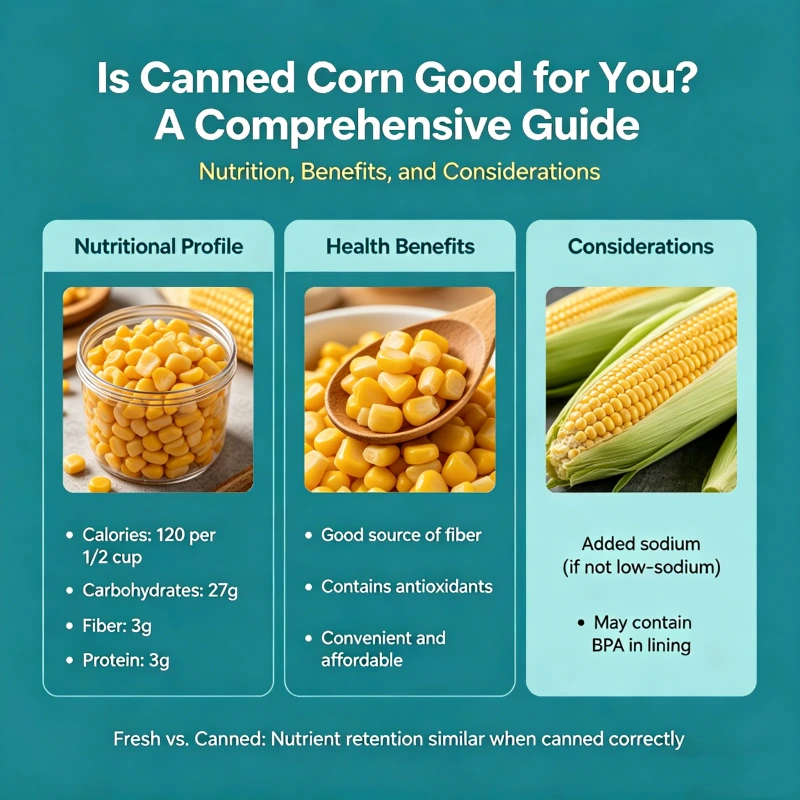
The nutritional components of canned corn.
Nutritional Profile of Canned Corn: Science-Backed Data
Canned corn retains much of the core nutrition found in fresh corn. According to the USDA FoodData Central (2024), here’s a detailed comparison per 100 grams of edible portion:
| Nutrient | Fresh Yellow Corn (Cooked) | Frozen Corn (Cooked) | Canned Corn (Drained, Regular) | Canned Corn (No Salt Added) |
|---|---|---|---|---|
| Calories | 96 kcal | 86 kcal | 87 kcal | 87 kcal |
| Carbohydrates | 21.5 g | 19.3 g | 19.0 g | 19.0 g |
| Dietary Fiber | 2.4 g | 2.8 g | 2.5 g | 2.5 g |
| Sugars (natural) | 4.5 g | 3.2 g | 3.2 g | 3.2 g |
| Protein | 3.4 g | 3.2 g | 3.2 g | 3.2 g |
| Vitamin C | 6.8 mg | 5.5 mg | 3.3 mg | 3.3 mg |
| Folate (B9) | 42 µg | 37 µg | 37 µg | 37 µg |
| Potassium | 270 mg | 245 mg | 135 mg* | 245 mg |
| Sodium | 1 mg | 2 mg | 287 mg | 5 mg |
Note: Potassium loss in regular canned corn is often due to leaching into salted brine. No-salt-added versions retain more potassium.
Key Insights:
Vitamin C is heat-sensitive; canning reduces it by ~50% compared to fresh, but it’s still present.
Fiber and protein remain stable across all forms.
Sodium is the biggest differentiator—choose “no salt added” to avoid excess intake.
Antioxidants like lutein and zeaxanthin are largely preserved due to their heat stability.
Corn is naturally rich in antioxidants like lutein and zeaxanthin, which support eye health. While some nutrient loss occurs during canning—especially heat-sensitive vitamins like vitamin C—the overall nutritional value remains substantial.
Comparison: Canned vs. Fresh vs. Frozen Corn
| Factor | Canned Corn | Fresh Corn | Frozen Corn |
|---|---|---|---|
| Nutrient Retention | Moderate (loss of Vit C) | High (if consumed soon after harvest) | High (flash-frozen within hours) |
| Convenience | Ready-to-eat; no prep | Requires shucking, boiling/steaming | Thaw or cook briefly |
| Shelf Life | 2–5 years (unopened) | 3–5 days (refrigerated) | 8–12 months (frozen) |
| Cost (per serving) | $0.20–$0.40 | $0.60–$1.20 (seasonal) | $0.30–$0.50 |
| Additives Risk | Possible sodium/sugar | None | Rarely any |
| Best For | Emergency meals, soups, stews | Summer salads, grilling | Smoothies, stir-fries, baby food |
Frozen corn often matches fresh corn nutritionally because it’s flash-frozen shortly after harvest. Canned corn may have slightly lower levels of certain vitamins but compensates with convenience and year-round availability.
Potential Health Benefits of Canned Corn
1. Rich in Dietary Fiber
The fiber in corn supports digestive health, helps regulate blood sugar, and promotes satiety—making it useful for weight management. A single cup provides ~4g of fiber, or 14% of the daily recommended intake.
2. Source of Plant-Based Protein
While not a complete protein, corn contributes to daily protein intake, especially in vegetarian or plant-forward diets. Combined with legumes (e.g., black beans), it forms a complete amino acid profile.
3. Affordable Nutrition
Canned corn is significantly cheaper than fresh or frozen options in many regions, making it an accessible source of nutrients for budget-conscious families. Studies show canned vegetables provide more nutrients per dollar than fresh counterparts.
4. Long Shelf Stability
Ideal for emergency preparedness, camping, or reducing food waste—canned corn doesn’t spoil quickly and requires no refrigeration until opened.
5. Supports Eye and Heart Health
Lutein and zeaxanthin in corn may reduce the risk of age-related macular degeneration. Additionally, its potassium content (in low-sodium versions) helps counterbalance sodium’s effects on blood pressure.
Common Concerns About Canned Corn – Debunked
1. High Sodium Content
Many commercial canned corn products contain added salt as a preservative and flavor enhancer. Excess sodium intake is linked to high blood pressure and cardiovascular disease.
✅ Solution: Choose “No Salt Added” or “Low Sodium” varieties. Rinsing canned corn under water can reduce sodium by up to 40%.
2. Added Sugars or Syrups
Some brands pack corn in sugary syrups (more common with cream-style corn). This increases calorie density and glycemic load.
✅ Solution: Read labels carefully. Opt for corn packed in water rather than syrup or broth.
3. BPA (Bisphenol A) Exposure
BPA is a chemical used in the epoxy lining of some metal cans. It can leach into food and has been associated with hormonal disruption.
✅ Solution: Look for brands that explicitly state “BPA-Free Lining” on the label. Many reputable manufacturers, including export-focused companies like Jutai Foods, now use BPA-free packaging to meet international safety standards.
Note on BPA Alternatives: Some cans now use BPS or BPF as substitutes. While research is ongoing, regulatory agencies like the FDA consider current exposure levels safe. However, leading exporters increasingly adopt plant-based linings (e.g., oleoresin) to eliminate concerns entirely.
How Canned Corn Is Made: From Field to Can
Understanding the production process reveals why canned corn can be fresher than “fresh” supermarket corn:
Harvest: Sweet corn is harvested at peak ripeness (typically within 24 hours of optimal sugar content).
Transport: Moved rapidly to nearby processing plants (often within 6–8 hours).
Cleaning & Husking: Automated systems remove husks, silk, and debris.
Blanching: Brief hot-water or steam treatment (90–95°C for 2–5 minutes) deactivates enzymes that cause spoilage.
Canning: Kernels are filled into cans with water or light brine.
Sealing & Sterilization: Cans are hermetically sealed and heated to 116–121°C for 20–90 minutes (depending on size) to destroy microbes.
Cooling & Labeling: Rapid cooling preserves texture; labels applied for distribution.
This entire process locks in nutrients and flavor faster than the days-long journey of “fresh” corn shipped across continents.
Global Consumption Trends & Market Insights (2025)
Canned corn enjoys strong global demand:
Top Consumers: United States, Mexico, Philippines, Brazil, and Russia.
Growth Markets: Middle East and Southeast Asia, where urbanization drives demand for convenient foods.
Export Volume: Global canned vegetable trade exceeds 5 million metric tons annually, with China as a top exporter.
Post-pandemic, consumers prioritize shelf-stable, nutritious, and affordable foods—boosting canned corn sales. In Europe, demand for organic and low-sodium canned corn is rising by 8–10% yearly.
Companies like Jutai Foods leverage market analysis services to help importers identify these trends and tailor product formulations (e.g., launching no-salt-added lines for Germany or organic corn for Australia).
Environmental and Sustainability Considerations
Canned corn has a surprisingly low environmental footprint:
Packaging: Steel cans are 70–90% recyclable, far higher than plastic pouches or glass.
Food Waste Reduction: Canning prevents spoilage—up to 30% of fresh produce is lost before consumption.
Carbon Efficiency: Localized processing (e.g., Jutai’s Qingdao base near farms) reduces transport emissions vs. air-freighted “fresh” imports.
Jutai Foods implements sustainable practices:
Solar-powered factories
Water recycling in blanching systems
Organic-certified planting bases with crop rotation
Myths vs. Facts About Canned Vegetables
| Myth | Fact |
|---|---|
| “Canned corn has no nutrients.” | It retains most fiber, minerals, and carotenoids; only heat-sensitive vitamins (like C) decrease moderately. |
| “All canned foods are high in sodium.” | No-salt-added options contain <5mg sodium—less than fresh corn cooked in salted water! |
| “Canned = low quality.” | Premium brands use rapid processing to preserve peak freshness—often superior to week-old “fresh” corn. |
| “Canned foods need preservatives.” | No! Safety comes from heat sterilization + vacuum sealing, not chemicals. |
Practical Tips: Storage, Selection & Recipes
Storage Guidelines
Unopened: Store in cool, dry place for 2–5 years.
Opened: Transfer to non-metal container, refrigerate, use within 3–4 days.
Signs of Spoilage: Bulging lid, off odor, discoloration, or spurting liquid when opened.
Quick Meal Ideas
Mexican Street Corn Salad: Mix canned corn, mayo, lime, chili powder, and cotija cheese.
Corn & Black Bean Bowl: Combine with rice, avocado, and salsa.
Creamy Corn Soup: Blend with onions, garlic, and vegetable broth.
Emergency Fried Rice: Stir-fry with eggs, peas, and soy sauce.
How to Choose Healthy Canned Corn
When shopping for canned corn, follow these guidelines:
Check the Ingredient List: It should contain only corn, water, and possibly salt. Avoid products with sugar, modified starches, or artificial preservatives.
Look for “No Salt Added”: Especially important for those managing hypertension.
Verify BPA-Free Packaging: Increasingly common among global exporters.
Consider Organic Options: If pesticide residue is a concern, organic canned corn is available in many markets.
Culinary Uses of Canned Corn
Canned corn is incredibly versatile:
Soups & Stews: Adds sweetness and texture to chili, chowders, and tortilla soup. View related products: 820g canned kernel corn
Salads: Works well in grain bowls, Mexican street corn salad (esquites), or tuna salad. View related products: 400g canned corn
Side Dishes: Sauté with garlic, lime, and cilantro for a quick side.
Baking: Used in cornbread, muffins, and fritters. View related products: canned fresh sweet corn
Emergency Meals: Combine with canned beans and rice for a complete protein dish.
Because it’s pre-cooked, canned corn requires minimal preparation—just drain (and rinse, if desired) and add directly to recipes.
Jutai Foods Group Limited: Quality You Can Trust
When sourcing canned corn for retail, food service, or private labeling, quality and compliance matter. That’s where Jutai Foods Group Limited stands out.
Based in Qingdao, China—a major port city—Jutai Foods offers low-cost export services and seamless logistics to over 80 countries, including the European Union, United States, Japan, Australia, and the Middle East.
Why Partner with Jutai Foods?
Vertical Integration: Owns planting bases, factories, R&D labs, and workshops—ensuring control from farm to can.
Global Certifications: Facilities are certified under ISO22000, BRC, HACCP, U.S. FDA Registration, and KOSHER standards.
Product Range: Specializes in canned fruits, vegetables (including corn), and fish.
Custom Services:
OEM: Use your own brand and label.
LCL (Less than Container Load): Mix multiple canned products in one 20ft container.
Market Analysis: Get insights into canned food demand in your region.
Annual Production: Over 20,000 tons, demonstrating scalability and reliability.
Commitment to Quality: All products comply with statutory and regulatory requirements, with continuous improvement in quality management systems.
For businesses seeking a trustworthy supplier of safe, nutritious, and competitively priced canned corn, Jutai Foods combines professional expertise with global compliance.
Contact Jutai Foods today—you’ll receive a response within 24 hours.
Final Verdict: Is Canned Corn Good for You?
Yes—with smart choices.
Canned corn is a nutritious, economical, and convenient food when selected wisely. By opting for low-sodium, no-sugar-added, BPA-free versions, you can enjoy its benefits without the drawbacks. It’s not inherently “unhealthy”—like most processed foods, the key lies in how it’s made and how you use it.
In a balanced diet that includes whole grains, lean proteins, fruits, and vegetables, canned corn can be a valuable player—especially when fresh produce is unavailable, unaffordable, or impractical.
And with responsible manufacturers like Jutai Foods Group Limited prioritizing food safety, sustainability, and customer needs, the future of canned vegetables looks brighter—and healthier—than ever.
Remember: Always read labels, rinse when needed, and pair canned corn with other whole foods for a well-rounded meal. Your body—and your pantry—will thank you.